


Shalom Ansche Chesed! I write from a chilly, wet Tel Aviv. I am staying a few days beyond our Ruach Nediva/”the Volunteering Spirit” service learning trip to Israel, after putting most of the group on the plane Sunday night.
Rabbi Hammerman and I are so grateful for Carolyn Greene’s amazing volunteer leadership, and our professional partners at World Class Travel, plus our wonderful tour guide Zvi Levran. Together we crafted an experience that engages with Israel’s internal and external challenges today.
Many of our experiences and meetings were totally madhim, amazing! But the weather? Al hapanim. A bit of a face plant or at least a challenge, thanks to Byron, a major storm that blew in off the Mediterranean, creating dangerous flooding, closing some areas and keeping us often cold and wet. The storm’s major impact on our programming was to wash out some of our outdoor volunteering plans. You can’t work the community garden in a downpour.
I wish I could convey to the community all our experiences in detail, but that would be too long – This message is long enough as it is. So let me recap some major themes we touched, and share some of what we saw and heard. I hope these comments stimulate you to remain connected to friends and family there, so you can learn more and remain part of the project, to build the reality in the Holy Land that you want to see.
Let’s lead with the most impactful:
Choosing Life After Azza
Our trip coincided with Parshat Vayeshev about Joseph and his brothers. Joseph is clearly his father’s favorite, prodigiously talented and marked for destiny. The brothers hate him for flaunting his specialness. He has everything and is totally alone. When Jacob dispatches him north to meet up with the rest of the sons, he gets lost. What do you want, asks a providential guide? “I am seeking my brothers,” he replies. That verse haunted me throughout the trip.
These have been years of overwhelming death in the Holy Land, scarring Gazans, obviously, and Israelis. City walls, bus stations, and lampposts are covered with stickers bearing the names and smiling faces of 10.7 victims, hostages who did and did not return, and fallen soldiers, with statements conveying who they were at their best. One of our goals in this trip was to seek our brothers and sisters, to connect with them, to hear their stories, to contribute in any way we can to their healing. Over and over, when people told us their traumatic stories, they asserted that it helped in their own recovery to share their pain. The least we could do was listen.
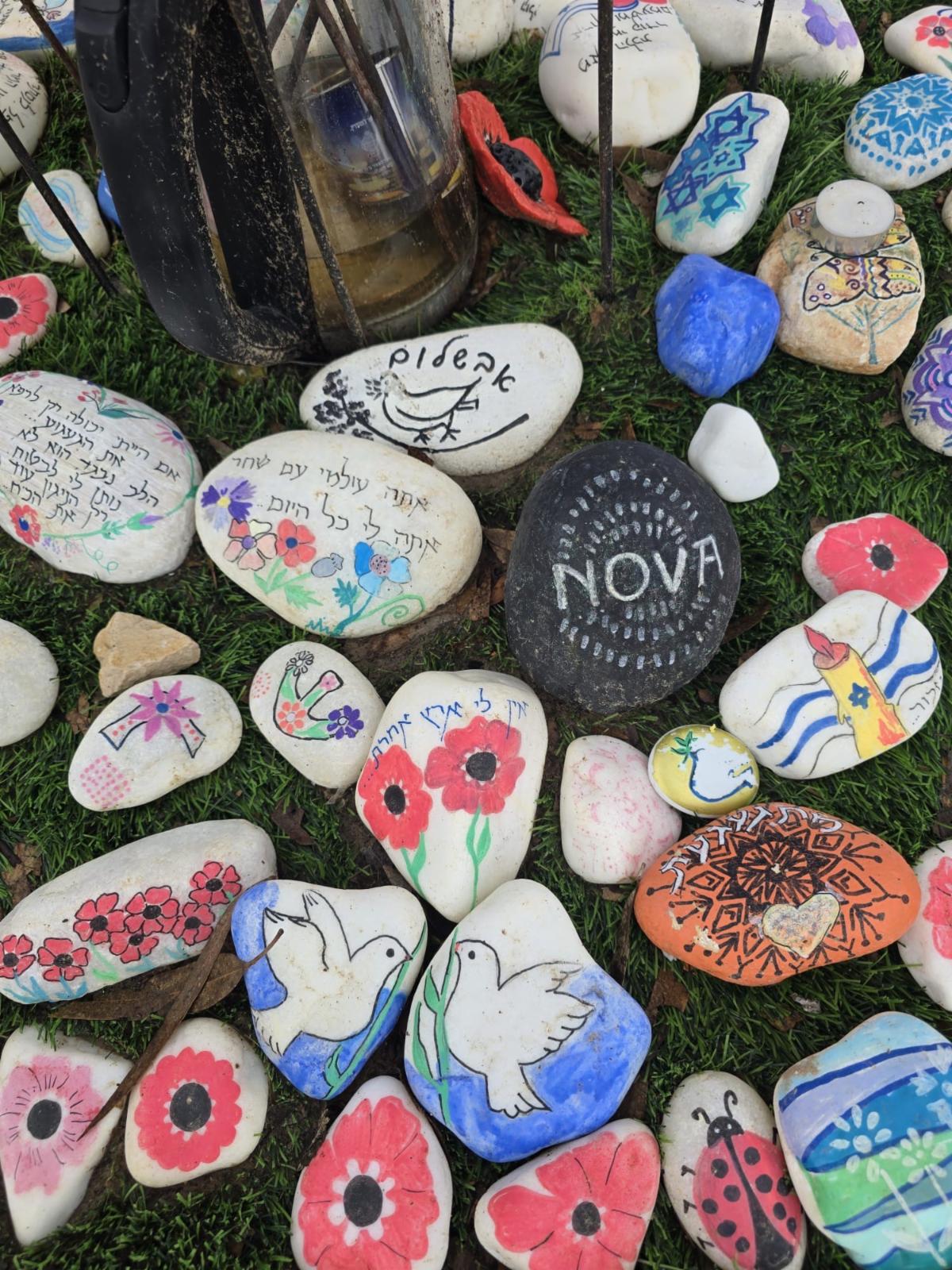
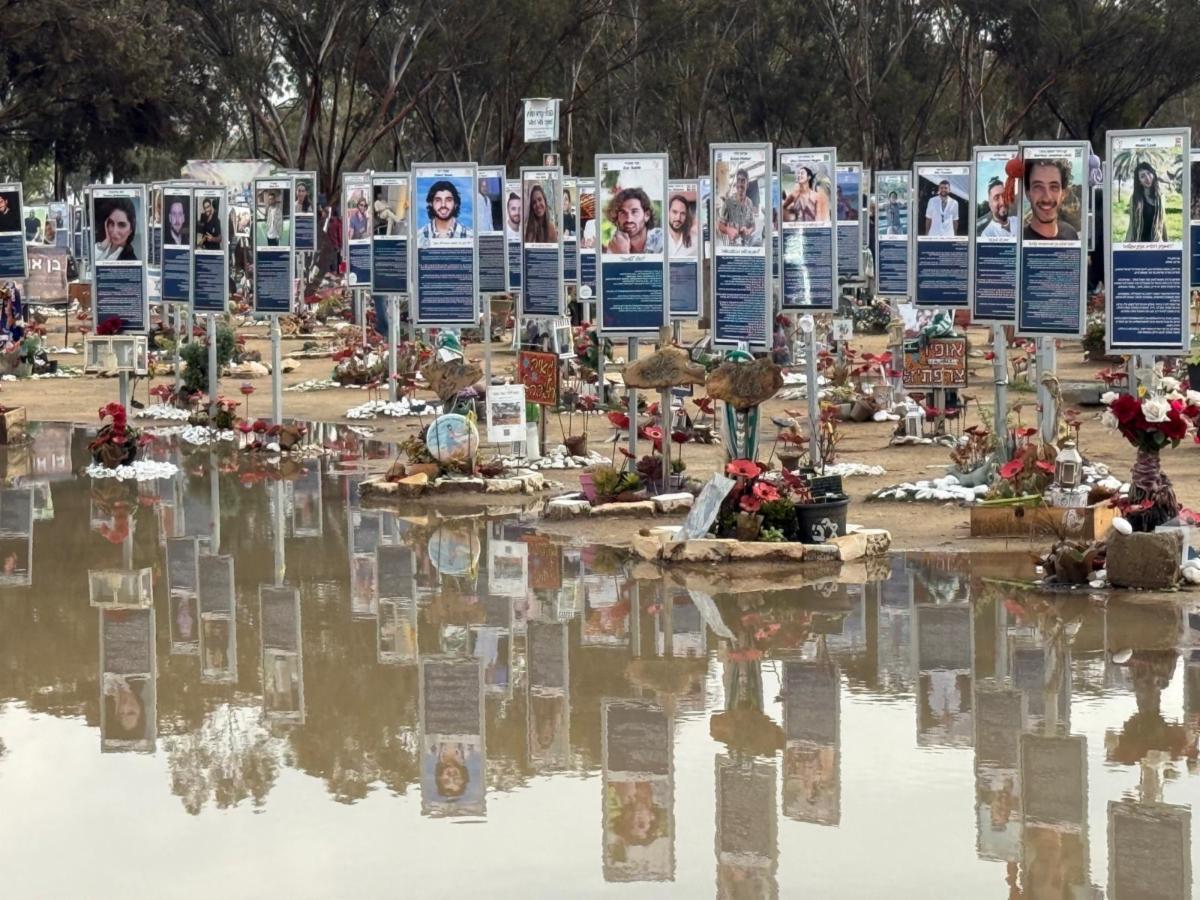
I wish I could relate them all to you, but, as the rabbinic saying goes, “if all the seas were ink and all the reeds quills and all the heavens parchment,” I could not do justice to:
- Raz Matalon, brother-in-law to Eli Sharabi, the hostage who returned, and Yossi, his brother, who did not. Raz is a landscape architect, helping the communities of the south build outdoor public space to restore communal life.
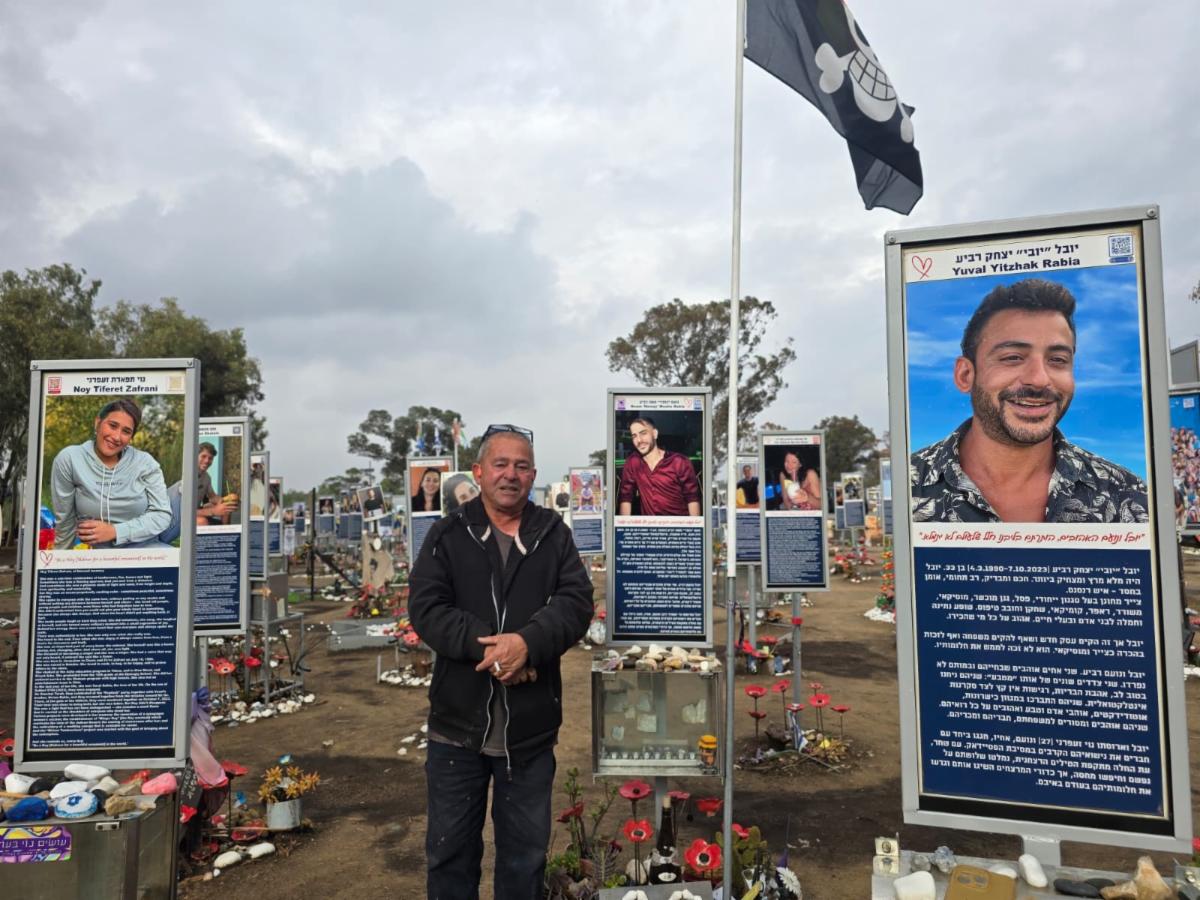
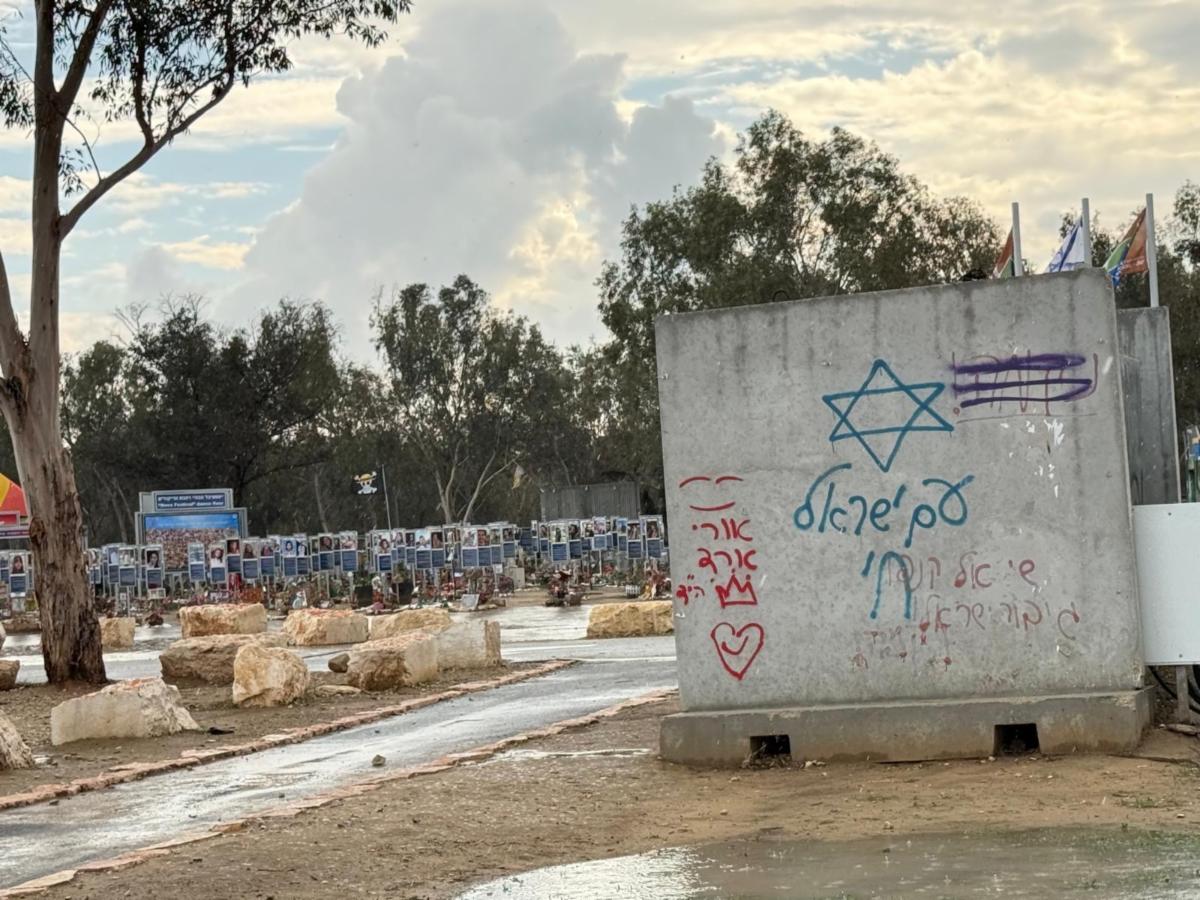
- JoJo Rabiya, whose sons Noam and Yuval were murdered at the Nova festival. A metalworker by trade, he has crafted the frames for the hundreds of memorial photos, at his own expense. He visits every day.
- Noam Lev-Ram, who met with us on Zoom because the rainstorm prevented him from traveling from the north. Visibly shaken, often weeping, Noam recounted his harrowing story of fleeing the shooting at Nova, hiding among a grove of trees. Like many we met, he was open about his post-traumatic stress.
- Nitzan Levi, grievously wounded in Gaza, and his wife Sivan, as they tried to keep their lives together. Nitzan’s tank was hit with an RPG, killing one of his team of four and burning him badly. At that time, Sivan was eight months pregnant and caring for a toddler. With much communal and family support they endured through months of convalescence. Nitzan has returned to reserve duty; he would not consider otherwise, and has since served in Syria. Sivan told us that she has learned that fulfilling the Torah’s commandment to “choose life” is not a big decision made once, but a thousand small decisions, made day after day.
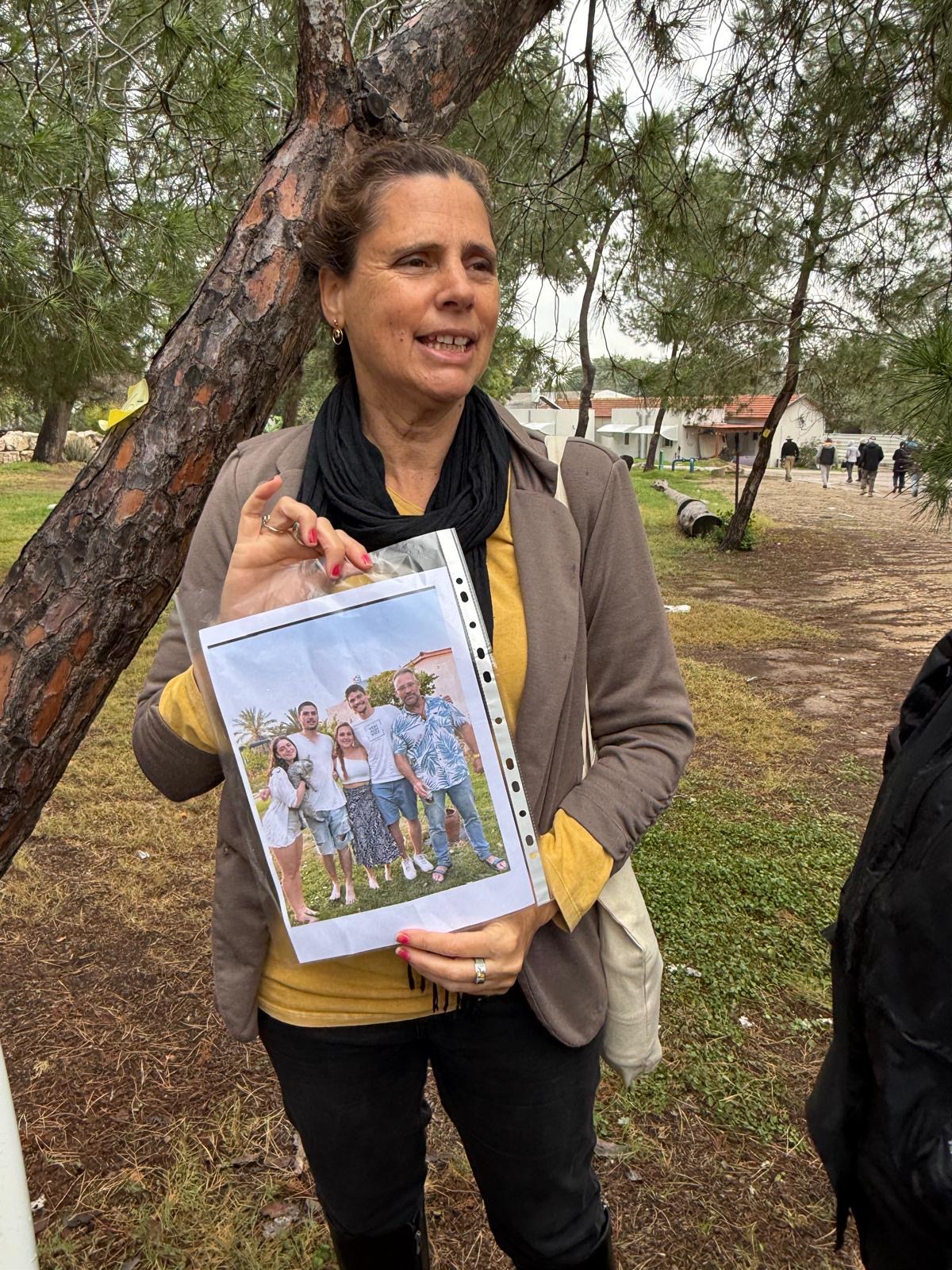
For me, our most unforgettable visit was to Kibbutz Kfar Azza, where some 250 Hamas fighters overran the community on October 7, killing 62 residents and taking 19 hostages. Some of the Kfar Azza hostages’ names will be familiar, like the American-Israeli Keith Siegel and his wife Aviva, who spoke at AC after her return in the November 2023 exchanges, and Emily Damari, who famously lost her fingers and upon her release in January, flashed her 3-finger salute proudly.
I visited this scene in November 2023, not one month from the horror, when you could smell what had happened and see blood and bullets on the ground. Our AC trip was here last June as well, before any rebuilding had begun. This time, reconstruction work was evident, although residents still will not return until late 2026.
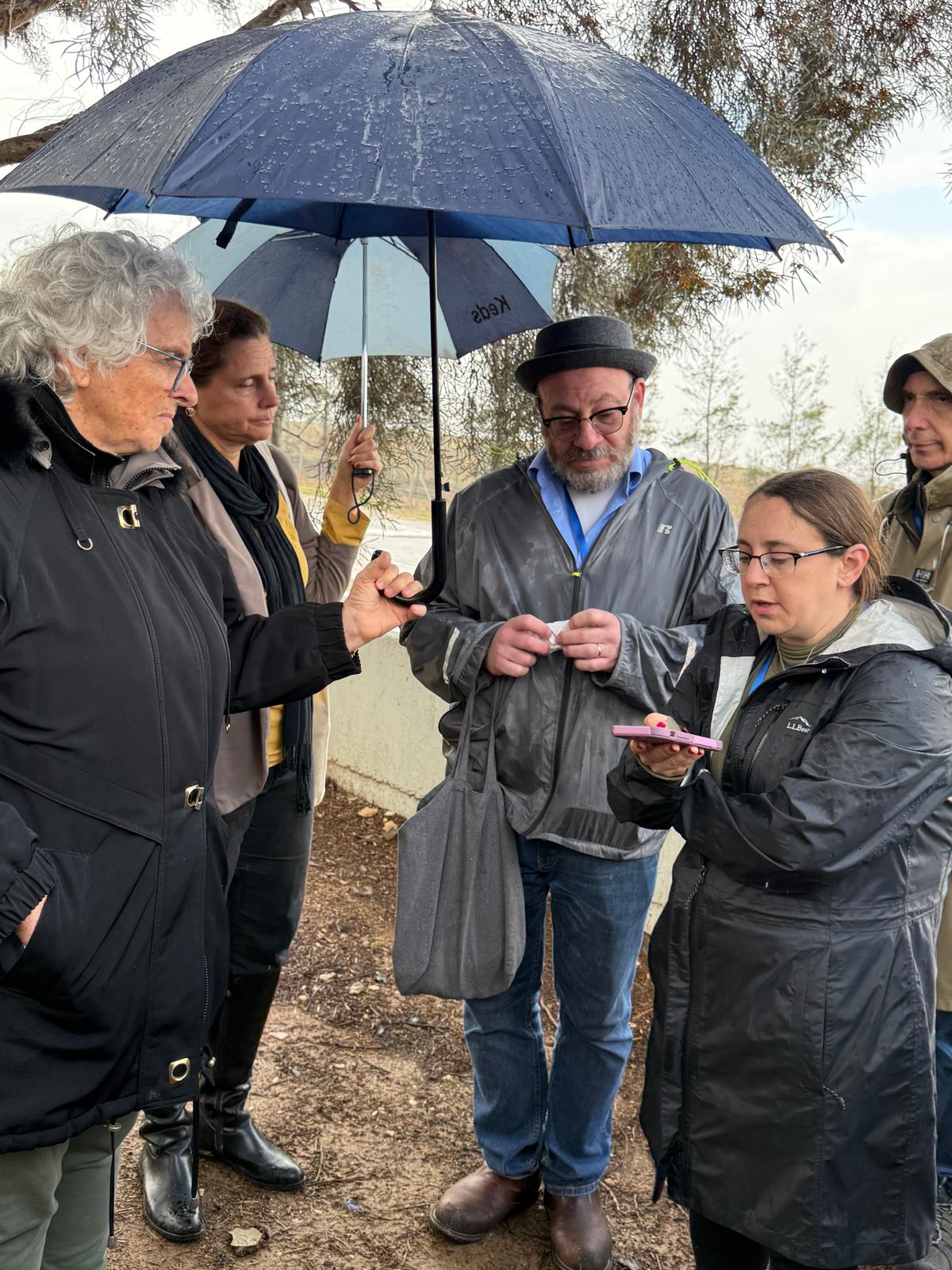
This time, we were escorted around by two women with extraordinary stories, Orit Levi, who lost her ex-husband and brother-in-law and whose mother nearly lost her life, and Liora Eilon, whose son Tal was the head of the local civilian defense force, and was one of the first killed. Liora, another son and daughter and two granddaughters took refuge in a safe room for 36 hours. At times, they literally held the door handle shut while Hamas fighters pulled at the other end. When the IDF finally freed them – during a two-day battle to retake the Kibbutz – they learned that Hamas men were hiding inside the house with them the whole time.
Liora told us that she is one of the characteristic “Gaza Envelope” peace activists, who for years met with Gazans, ferried them to doctors and hospitals in Israel. Despite the wreckage, she is not giving up. “We must fight our enemies,” she said, “and never forget that our enemies are human beings.” Amen to that.
Like many others, she said that telling her story is a form of her own healing. Liora related a midrash she composed to Lamentations 1.2: בכה תבכה בלילה, “weep, weep in the night” – with the verb “weep” repeated, as is common in Biblical grammar. To her it means that bereaved mothers should weep in public for all to see, not alone in the night, so that it spurs others to weep with her, forging a community of shared grief.
If you follow the news in Israel, you probably know of the society’s tremendous need for mental health support. Ansche Chesed has committed to raise funds for treatment for Kfar Azza survivors. Please keep your eyes open for further details. We hope you’ll join the effort.
Jews and Others
Our tour began at Zippori, in the Lower Galilee, an ancient commercial, political and intellectual center. Rabbi Judah HaNasi lived here when he edited the Mishnah around 200 CE. Today it is one of Israel’s most thrilling archaeological sites.
The visually amazing remnants of this Greco-Roman city provide a doorway to talk about how Jews have addressed cultural and religious diversity, both historically and today. The Torah mandates maximal intolerance for idolatry in the Holy Land. Smash every idol, destroy every shrine, burn every sacred tree. Jews simply must not coexist with idol worshipers. There is no one-to-one correspondence between this biblical attitude and contemporary views. But one can find an echo of that absolutism and in contemporary exclusivism in Israel, in which non-Jewish citizens or residents are viewed with suspicion, at best.
Notably, this was not the Talmudic Sages’ prevailing view. We studied a famous passage which depicts Rabban Gamliel using “Aphrodite’s Bathhouse” in Acco, evidently the height of luxury, decorated with fancy statues. How could he do such a thing? By Rabban Gamliel’s time, it had become intellectually and spiritually plausible to live an excellent Jewish life without going full Taliban on other peoples’ practices and beliefs, even in the Holy Land. Jews can disagree with pagans, but we might also view them more flexibly, for example, by viewing some images as forbidden idols, and others as unobjectionable art. This comparatively open approach is evident everywhere in Zippori, where extraordinary Greco-Roman art decorates what were apparently Jewish spaces. Most striking is the synagogue [c. 300], whose mosaic floor depicts clear Jewish themes like the binding of Isaac, holiday rituals and temple sacrifices, as well as the zodiac signs with their Hebrew names, surrounding a depiction of the sun pulling a chariot. This is probably not pure paganism, but a creative allusion to the Greek god Helios, while referring to the true God of Israel. For at least some ancient Jews – in a cultural center, not a far-flung outpost – it made sense to live among, not sealed off from, other cultures.
This discussion helped frame several subsequent programs, such as when we visited Druze Israelis in their small capital, the Galilee town of Julis, and met with Shahira Shalaby, former deputy mayor of Haifa and co-executive director of the Abraham Initiatives, the leading grass roots organization building shared society for Jews and Arabs. (Thanks to our member Jimmy Taber, Abraham Initiatives’ director of international development, who helped put this together.) We visited the ancient village Jews call Shfaram, where the Sanhedrin once sat, and is now the Christian-Muslim-Druze village of Shefa-Amr. A small number of Jews lived there until the 1920s as well. We visited a dormant synagogue, and recited a chapter of Psalms, to add to the prayers offered there over the centuries.
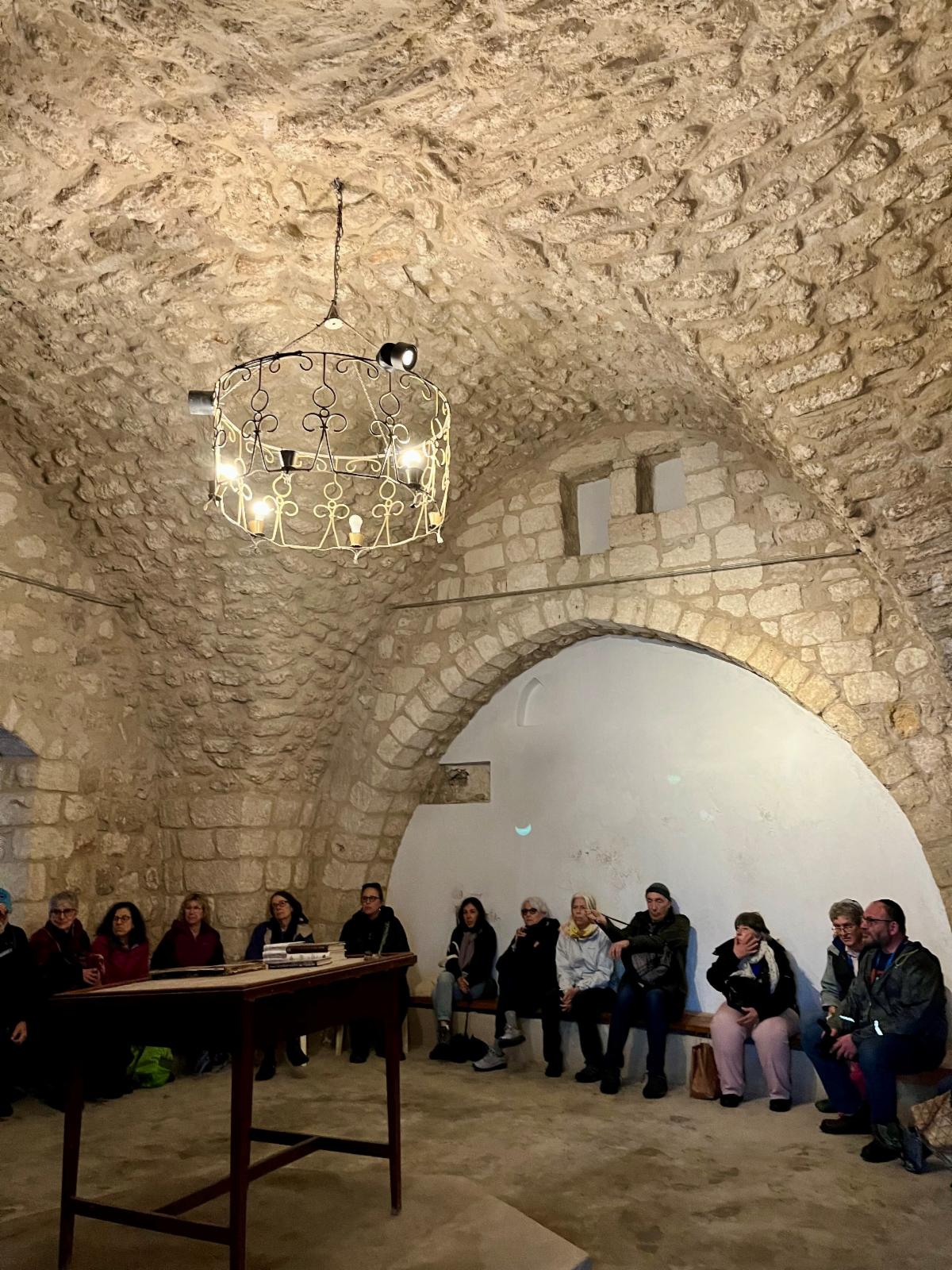
In Shefa-Amr, Shahira spoke about major advances Palestinian citizens have made in recent years, especially in educational and professional attainment. As is well-known, Arab citizens are now disproportionally represented among Israeli doctors, nurses and pharmacists. But a sense of shared project for all citizens remains underdeveloped. “I don’t want to be a guest in your house,” she says, “I want us to build the house together.”
Most American Jews probably know less about the Druze, an Arabic-speaking minority, living across Israel, Syria and Lebanon, who at some point broke from Islamic orthodoxy to develop their own religion, whose texts and rites they keep secret. Among their hallmarks is a fierce loyalty to the countries where they live. Not every Israeli Druze is a patriot – some identify with the Palestinians – but most are. Maj. Gen. Ghassan Alian is one of the most senior IDF officers, for instance, and most Druze men are drafted and serve proudly. Naturally this can entail some conflicts between the Israelis and their cousins in other countries, but as we’ll see, the Israelis are looking pretty good to the Druze right now.
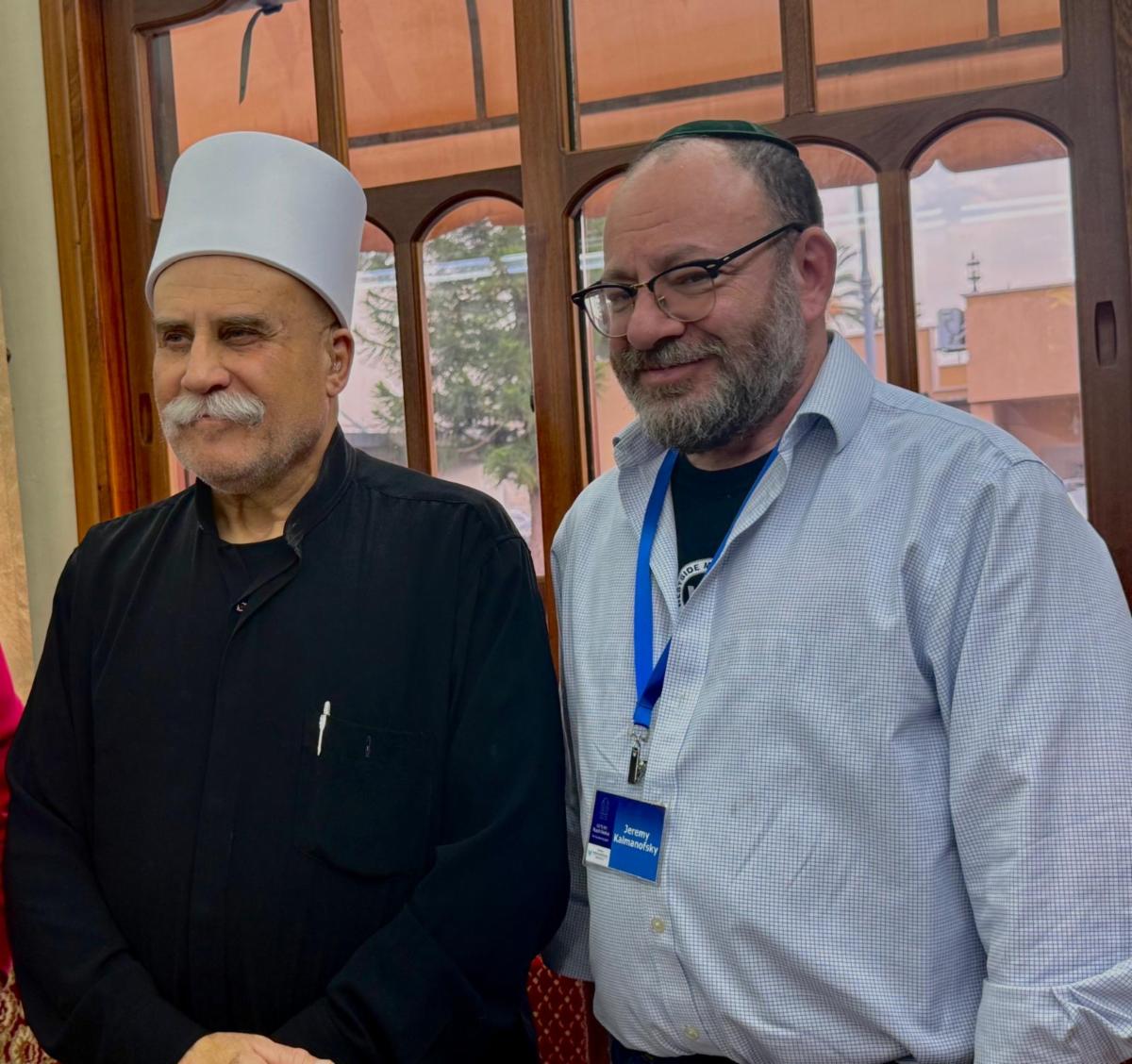
At Julis, we visited the seat of the Tarif family, the chief Sheikhs of the entire Druze world. We also met Basma Hino, an IDF widow, at her restaurant, Noor, named for her son, who served during this war. Basma’s husband, Marcel, was wounded serving in the IDF during the second intifada in 2002, never emerging from a vegetative state until his death in 2015. When the war began, Basma made her restaurant kosher, feeding free meals to soldiers heading north. Adam, a Druze IDF veteran now living in Pennsylvania, told us how proud he was of serving Israel, and how pained he sometimes was at being held at arms length by Israeli society. He told us he is a passionate and proud Israeli, and only hopes his fellow citizens recognize that.
At the moment, the Julis Druze are especially grateful, they said, because Israel has offered protection to Syria Druze, thousands of whom were massacred this year by the new government in Damascus, headed by Ahmed A-Sharaa, a former al-Qaida warlord. “Once ISIS-Always ISIS,” read their posters. “Druze Lives Matter.”
All those – like me – who believe it remains possible for Israel to be both Jewish and democratic, will always wrestle with how to reconcile the imperatives of culture and equality, Jewish destiny and minority dignity. No answer will be perfect, but diverse people of good will can attain satisfying patterns.
The Vulnerable North
Our visit to the North was special, at least partly because of our fellow guests at the brand new David’s Harp hotel on the Kinneret. Hundreds of evangelical pastors from the US, South America, Europe and Africa converged for a celebratory convention, to walk in Jesus’ footsteps. Jews, these days, are awfully conflicted. But this joyful group lifted my spirits. I overheard one fellow’s phone call home, telling his family that he had just experienced the best day of worship in his life. A reminder of the power of holy places to touch our hearts.
It has been impossible to visit the north of Israel throughout the war, for obvious reasons. Hundreds of thousands of Israelis were evacuated in the upper Galilee, and those who were not evacuated were treated to horrifying daily fireworks displays, between Hizbullah rockets and Iron Dome interceptors. One of our presenters, Sarit Zehavi, a military expert who founded the Alma Institute, played us videos taken from her home of what she and her neighbors experienced for months on end.
Her presentation and the guides for a jeep tour we took up to the very edge of the wall upon the Lebanese border were sobering. Many of us might have hoped that after the pager plot and the bombing of Iran things were safer for Israelis in range of Hizbullah. Not so fast, I am afraid. While their capacity has been markedly diminished, Hizbullah is not disarming, Iran has not ceased sending them weapons, and the weak Lebanese army is not seriously intervening. Sarit gave the grim assessment that Israel would continue “mowing the grass,” in Lebanon for the foreseeable future. Right across the Lebanese border, behind the “big beautiful wall” Israel has built, we saw the remnants of destroyed homes on the hillside facing Metulla, the northernmost Israeli village. Our guides told us that every single structure in that town held munitions and launchers aimed at Israel, some of which we observed at an IDF post nearby. As I think of the local south Lebanese residents, I can only hope that they are safe from the fighting, and better off not facing either of these forces.
The jeep tour up to the border was both fun and sobering. Because the IDF only shoots down rockets that appear headed for towns, they let errant ones fall in fields, where they explode and burn. As a result, we drove on twisted roads through scorched forestland on our way north. There we saw stray cows and a wild boar, who was obviously clever enough to live among Jews and Muslims, none of whom would eat her. Some pig.
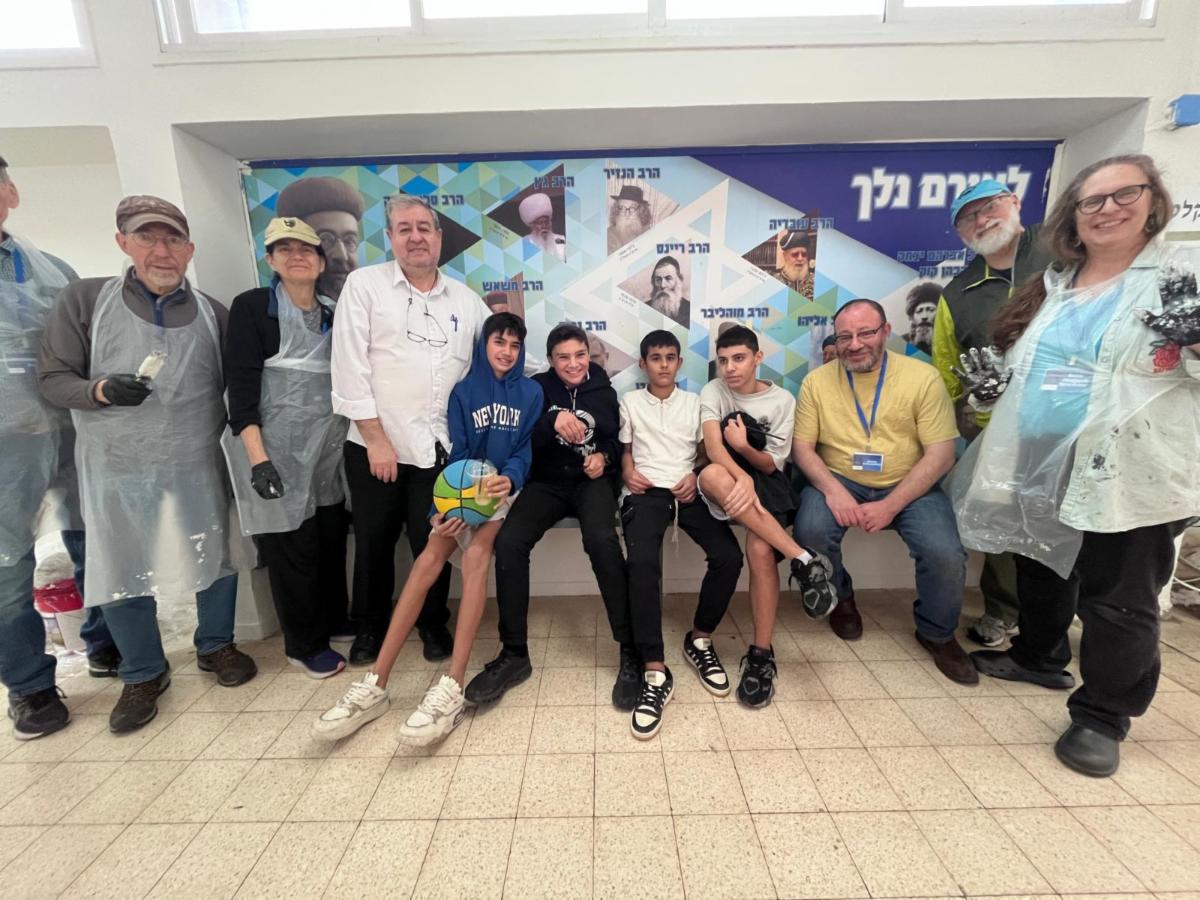
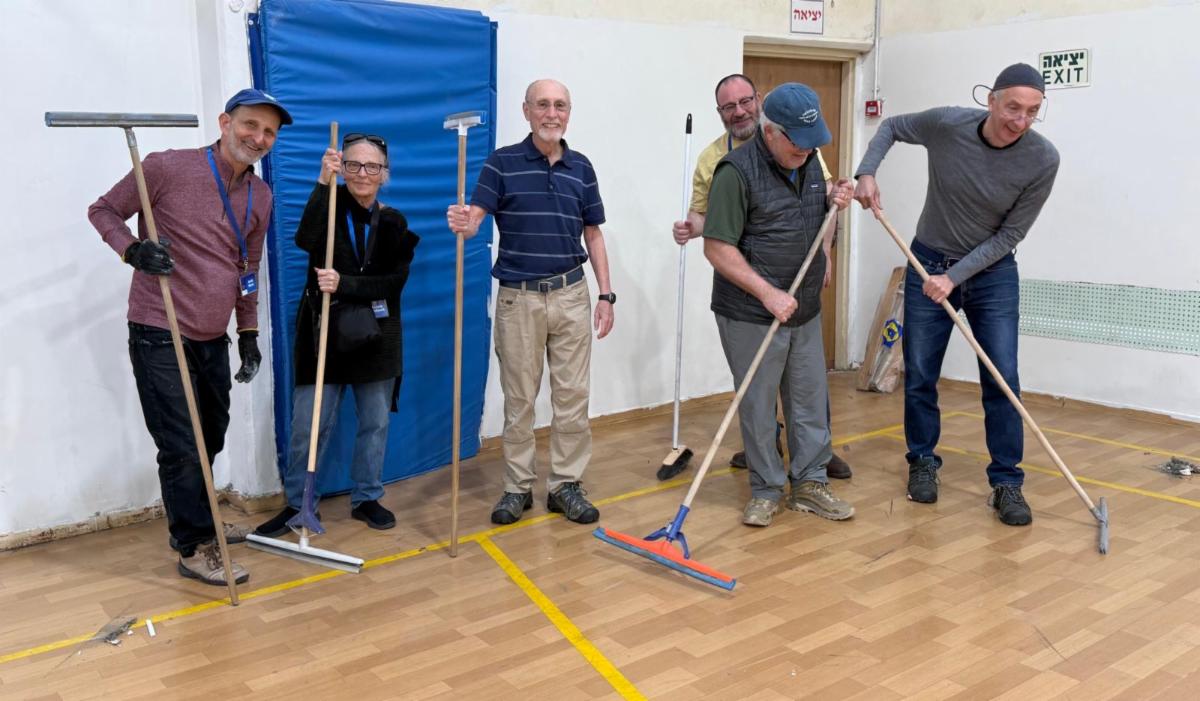
At Kiryat Shmona, the largest city in the north, we saw the town slowly coming back to life. About two-thirds of residents have returned. Here we had one of our most successful volunteer experiences, painting and cleaning a yeshiva school – some of us on the boys’ side and some on the girls’ side. We brought Hanukkah toys and talked with the kids and teachers.
Back From the Edges
Israel resembles America in many ways, these days, perhaps most of all in our toxic קיטוב/kituv or “polarization.” Right-or left-wing, religious extremists or secular partisans, pro-Netanyahu no matter what, or רל”ב/Ralab, an acronym for “just not Bibi.” Today I rode a taxi with a voluble driver who told me that while there must be a commission of national inquiry into the trainwreck of October 7, he doubts the inquiry will punish the true “traitors” in the security services and military intelligence who slackened the IDF’s vigilance in order to bring down the prime minister. You could call it Netanyahu Derangement Syndrome. (I am betting there is another explanation.)
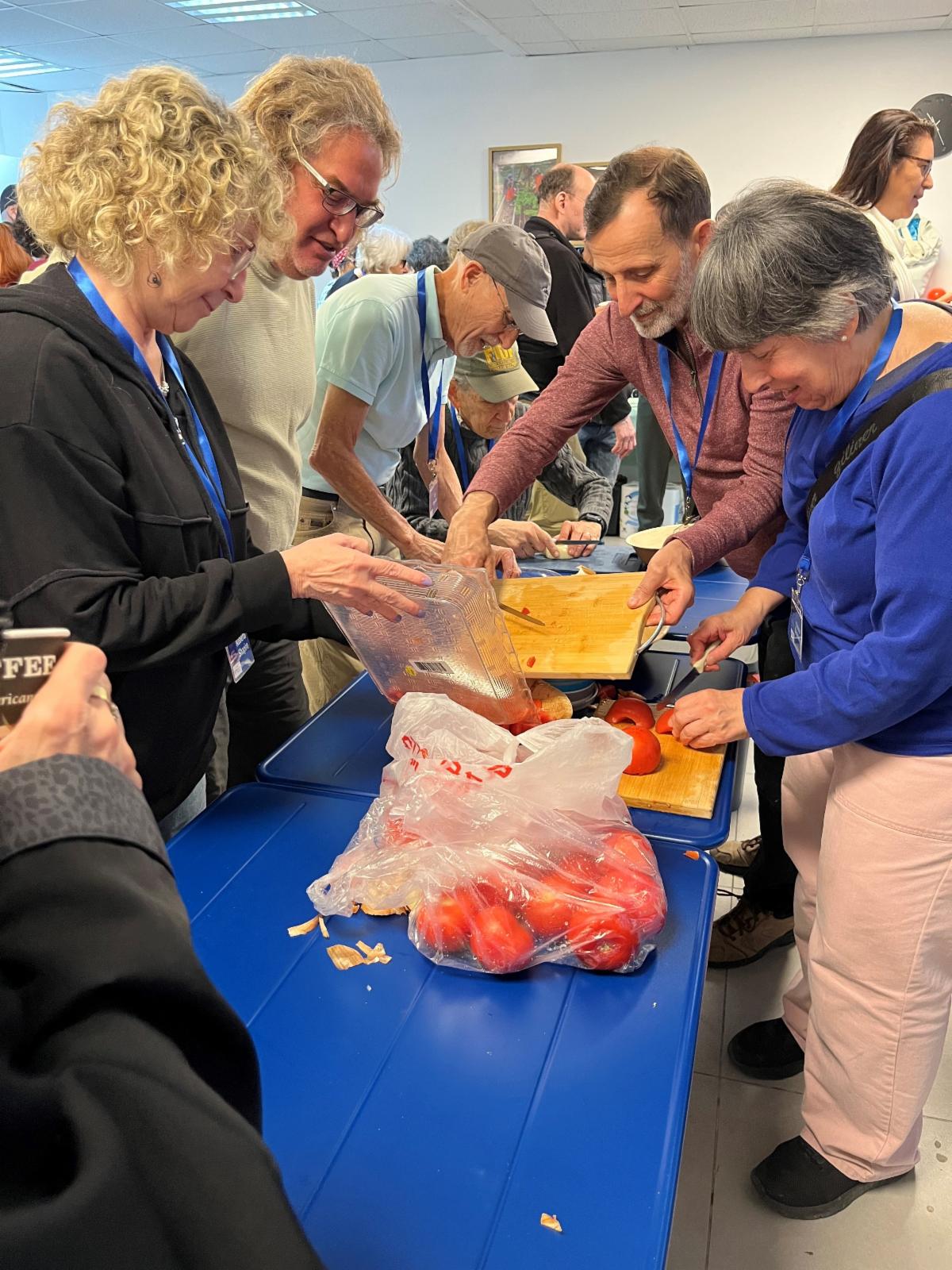
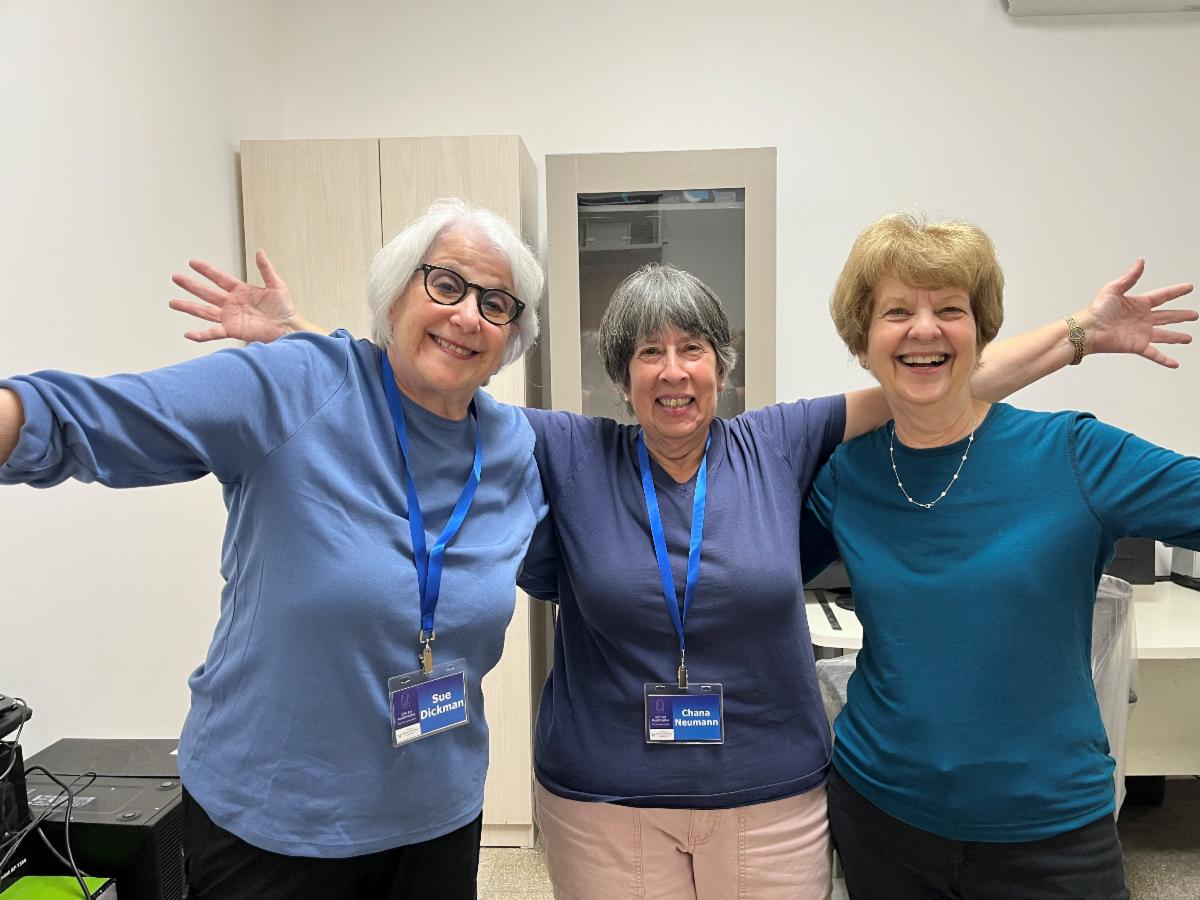
Still, my hope is restored when I meet Israelis of depth and virtue, working for a better society. For instance, we visited an outpost of the Tzedek Centers in the northern coastal town of Nahariya. Across the country, Tzedek centers operate on a community organizing model, helping local residents tackle practical obstacles to social equity and build social fabrics for Jews and Arabs, veterans and immigrants. While their participants, unsurprisingly, skew left, the organization focuses on issues of broad appeal. At Nahariya, not a liberal bastion, the participants we met included right-leaning voters. Tzedek Centers’ CEO, Lev Litman, spoke at AC in 2024. Although the rain prevented us from working in their community garden, we spent an engaging morning talking with their activists about their ruach nediva/volunteering spirit.
Later we met Rabbi Yehuda Jayson, a representative of the Fourth Quarter (sorry, they don’t seem to have an English website), a social movement aiming to nurture a centrist civic program that can appeal to a bell curve approaching 80% of the population, and taking the edges off more extreme elements at the far left and far right. Fourth Quarter activists worry that civil war could literally be around the corner unless structural changes limit both governmental and judicial overreach, and unless broad swaths of the population coalesce around commitments to a Jewish and democratic Israel, with full integration for Arab citizens in “the Israeli story,” if not necessarily a full Zionist program.
Leftist Israelis are often suspicious of the Fourth Quarter, seeing it dressing up rightist apologetics in centrist rhetoric and drawing false symmetries between left activism and the Kahanist far right. This critique may be valid. For example, the broad-based coalition they envision includes many religious Zionists, who are by no means committed to ceding Judea and Samaria. But I was impressed with the urgency of their commitment to muting Israel’s self-destructive national rhetoric, and for forging a “new social contract” that demands every citizen share the national burden – in military service, yes, but also in economic development and equality of resources. We could use some of that ethos in America, too.
In 2015, at the Jerusalem LGBTQ Pride Parade, Yishai Schlissel, an ultra-Orthodox man, stabbed to death Shira Banki, 15, who had come as an ally. Schlissel only weeks earlier had been released from prison after serving 10-years for a similar, non-fatal attack at the 2005 Pride Parade. He is now serving a life sentence for Shira’s murder. After her death, her parents founded Shira Banki’s Way, an organization dedicated to fighting hatred and intolerance in society. Ori Banki, her father, met us to describe their work and to tell Shira’s story.
Ori made the powerful claim – relevant to American life as well – that it does not help to chalk murders up to the behavior of “lunatics.” If killers are just mentally ill, then there is little anyone can do to prevent future attacks. But people with violent propensities are not just rogue actors. They can be supported and encouraged by socially destructive forces, as was the case here. Schlissel had been praised in certain quarters after the 2005 attacks, had his legal bills paid, and was greeted by supporters when he was released from prison the first time. Some religious leaders gave, at best, lukewarm criticism of his violence, while also tossing slurs and hateful anti-LGBTQ rhetoric. But more than they seek to condemn hateful forces, Shira Banki’s Way seeks to cultivate respect and love for all individuals – even those who are different and whom you might not understand – as a source of moderation and a hedge against extremism.
A Familiar Voice in Person
Few Israel commentators are as influential as Yossi Klein HaLevi, whose excellent writing and activism have become familiar to Americans, for example, through his Hartman Institute podcast For Heaven’s Sake. Yossi is a friend to many AC members, and we were privileged to meet him for dinner one night.
I think of him as central in multiple senses of the term: he is at the center of the English speaking conversation about Israel, and he takes resolutely centrist views that grapple seriously with the strengths and weaknesses of arguments of left and right. A typical Yossi incisive observation is his comment, from an earlier time, that he has two nightmares: that there will be a Palestinian state, and that there won’t be. Over the years, he has been an exemplary leader in interreligious dialogue in Israel and America, and fought for inclusion and respect for Arab citizens.
These days, Yossi is a furious critic of the current government – of Netanyahu’s authoritarianism and of the power granted to its most extreme Kahanist elements. At the same time, he remains an unapologetic Zionist who considers the ongoing conflict a just war fought as justly as possible, given that Hamas is embedded in population centers. To those who claim that Israel should pursue less vigorous military aims, he counters with a different challenge: what would be moral about failing to defeat a vicious enemy who has promised future October 7s?
Israel faces three major challenges today, he said: those from its sworn enemies; the loss of legitimacy in the international community, which treats Israel like a criminal state for defending itself; and most relevant to us, in its division from an ambivalent American Jewish community. Yossi argued that too many American Jews have allowed our sense of affirmative commitment to Israel to atrophy, in ways not found in other diaspora communities. Brits and Australians (especially this week) do not typically feel that Israel worsens Jewish vulnerability, as one hears from some American corners. In Yossi’s eyes, too many American Jews prefer the relative powerlessness of diaspora life – weak in some ways and safer in others – to the moral risks that come with Zionist political power. (I know some of our members would have counter-arguments, as is only fair.)
The Capital of Shabbat
A very special element in our trip was Shabbat in Jerusalem. No place in the world can match the peaceful atmosphere of Jerusalem as the sun sets on Friday, or on a quiet Saturday afternoon. Our group divided among various synagogues (or none) for Friday night and Shabbat morning. I myself, with some others, spent Friday night at Zion, the community led by my friend and colleague Rabba Tamar Elad-Appelbaum, for a beautiful and spiritual experience, suffused with music and rich conversation.
On Shabbat morning, I prayed at Hak’hel, a “partnership” style minyan in South Jerusalem. I have been there many times and know some of the hevreh. But this time I was unsure what to expect, because the community has been through so much in the last two years. This is the synagogue of Rachel and Jon Goldberg-Polin, whose son Hersh z’l was on our minds during his captivity and murder. This is the community of Effy and Oshrat Shoham-Steiner, friends to many at AC, who lost their son Yuval z’l in Gaza. Effy spoke to our group last year, when he told us “I have five sons, so my odds are not good.” Sadly, he now has four. (Both Effy and the Goldberg-Polin’s were in America this past Shabbat.) What would the atmosphere be like? Would the community have come together with great intensity? Would they be falling to pieces? In fact, this week is Yuval’s yahrzeit. How could anyone bear it?
When we arrived at services, the gym where Hak’hel prays was jammed for a bat mitzvah. A 12-year-old girl read the parsha with grace, aplomb and joy, surrounded by so much love and song and communal affirmation from parents, friends and a few of us strangers. At kiddush outside, people enjoyed sweets, donuts for Hannukah, and schnapps. The Shohams provided bottled beer, labelled with Yuval’s name and big round smiling face.
I thought then and continue to think of Sivan Levi’s wise observation. ובחרת בחיים/uvacharta bahyim/choose life. That is not one big decision, made once. Choose life over and over, every single day.
